 Matthew Mack

Do one thing: Here’s how to ask for a raise. Start a “wins” list today. Write down one result from this month and, if you can, put a number on it, such as dollars saved, hours saved, or sales closed.
When you want to earn more, getting a new job isn’t the only path. Often, the fastest route is a raise at your current job. Still, many people never ask. Knowing how to ask for a raise turns a nerve-racking talk into a plan. This guide walks you through it, from months of prep to the conversation itself, plus how to make the extra money count.
Why Ask for a Raise Before You Job Hunt
Changing jobs can bring a bigger jump in pay. However, it also means applications, interviews, and starting over somewhere new. A raise at your current job skips all of that.
A raise also builds on itself. Future raises are usually a percentage of your base pay, so a higher base today means bigger raises later. For example, a 5% raise on a $55,000 salary adds $2,750 a year, or about $229 a month before taxes.
Step 1: Start the Conversation Early
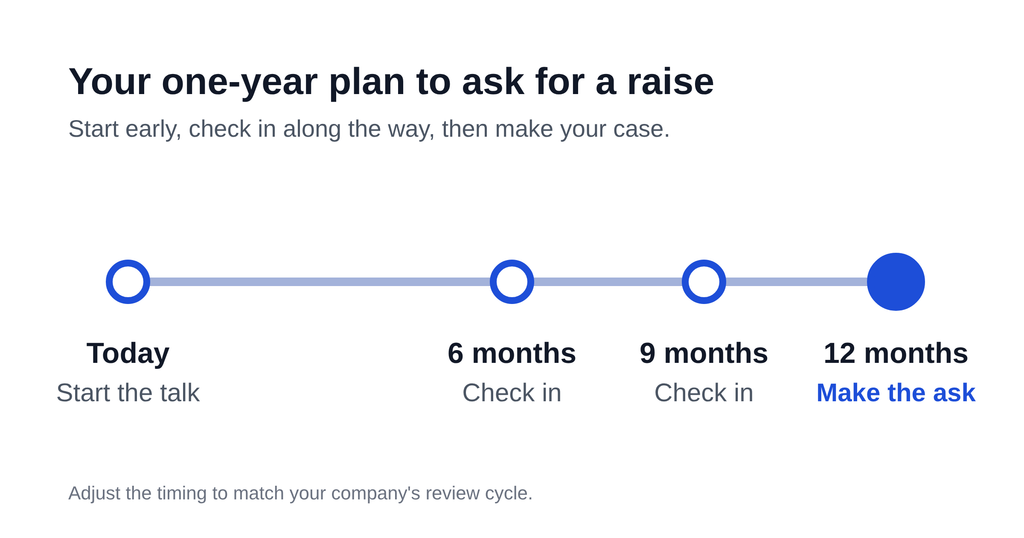
The best time to ask for a raise is months before you need the answer. So start now. Tell your manager you want to grow and earn more, then ask what a path to a higher salary looks like.
Next, set check-ins at about six, nine, and 12 months. At each one, review your progress toward the goals you agreed on. That way, your request won’t come as a surprise, and your manager will have time to plan for it.
Step 2: Research What Your Role Pays
Before you name a number for a raise, find out what people in your particular role are currently earning.
- Begin Research. To start, look at job postings for similar roles in your area. Many states now require employers to list pay ranges in job ads. Professional networks and salary sites can help too.
- Become Informed. Also, ask how raises work at your company. Many employers set a yearly budget for raises, and knowing the timing helps you plan. Once you have a target, consider asking for a bit more than that. This leaves room to negotiate.
Step 3: Document Your Value
Your wins list is the heart of your case when asking for a raise.
Be Specific. In particular, focus on results that helped the business, such as:
- Number of dollars saved
- % of revenue earned
- Number of problems solved
- Number of new skills implemented
Use numbers whenever you can. For instance:
“Cut supplier costs by 8%” is stronger than “Helped with vendors.”
Then bring a printed copy to your meeting so your manager can share it with the people who approve raises.
Step 4: Pick the Right Time to Ask for a Raise
Timing matters. Good moments include:
- Your annual review
- The months when your company sets its budget
- Following a big win
On the other hand, a round of layoffs or a bad quarter is usually a poor time to ask.
Step 5: How to Ask for a Raise in the Meeting
Ask for a meeting just for this topic, instead of tacking it onto a busy check-in. Then keep your request short and specific. For example, you might say:
“Over the past year, I’ve taken on X and delivered Y. Based on that, and what similar roles pay, I’d like to talk about raising my salary to $Z.”
After that, pause and let your manager respond. Stay calm and positive, even if you hear a “not right now.”
For more tips on making your case, read how to negotiate salaries and raises effectively.
What If the Answer is No?
A no today doesn’t have to be a no forever. Instead, ask what it would take to get a raise and when you can revisit it. Then set a follow-up date and keep adding to your wins list.
You can also ask about other ways to grow your pay or perks. For example, a bonus, more flexible hours, or paid training may be easier to approve. Meanwhile, if you want more income now, a side gig can help. Explore these side hustle ideas.
Make Your Raise Count
Once you get a raise, decide where the extra money goes before it reaches your account. Otherwise, it can disappear into everyday spending. Here are a few smart options:
- Build your safety net. Learn how an emergency fund helps you become financially resilient.
- Pay down high-interest debt. Put part of each paycheck toward your balances with a budget to pay off debt.
- Improve your DTI. A raise at your regular job also lowers your debt-to-income ratio, which lenders use to judge new loans, according to TransUnion. Plus, it shows up on your pay stubs, so lenders can verify it quickly.
Start Your Raise Plan Today
Asking for a raise takes some courage, but you don’t have to do it all at once. Start your wins list, set up your first check-in, and do your research. Even if the answer isn’t yes right away, you’ll walk in more empowered, knowing your value.

 Chris O'Shea


 Jean Chatzky


