 Jean Chatzky
Do one thing: Before opening a store credit card, make sure to read the fine print. Make sure you know how much interest and other fees you will be charged each month.
The Trade-Offs to Consider Before Opening a Store Credit Card
When you are new to credit, opening up a store credit card can be tempting. That’s especially if you are standing at a cash register and a sales clerk asks if you want to save 20% on today’s purchases. But before you agree to a lightning-fast credit check, there are some important points to consider about store credit cards.
On one hand, some store cards – think big-box home improvement centers or your favorite department store – can make for easier approval when compared to other traditional lender-backed cards. On the other hand, they often carry higher interest rates even for those with excellent credit.
A report from the Consumer Financial Protection Bureau (CFPB) found that:
- If you don’t pay off the balance every month, store cards are often more expensive than other cards: 90% of store cards reported a maximum APR higher than 30%. (APR stands for annual percentage rate and represents the total yearly cost of borrowing money, expressed as a percentage.)
- Some store cards have a fixed APR. This means the issuer charges all cardholders the same rate regardless of their credit score.
- Shoppers submit about half of retail card applications at the point of sale, and shoppers have reported experiencing aggressive sales tactics. Marketing initiatives such as loyalty programs also motivate store card applications, notes the CFPB.
Alvin Carlos, CFA, CFP, a financial planner and managing partner with District Capital Management in Washington, D.C., says there are pros and cons to weigh before those new to credit take the plunge and apply for a store card.
When Store Credit Cards Can Help
Building a solid payment history
One of the main advantages of opening a store credit card is building your credit history, since it reports to the credit bureaus, Carlos says. His personal take? “Treat a store card like a gym membership for your credit score. It only works if you use it lightly and consistently. And only use it when you really need to make a purchase there.”
More flexible approvals
Leah Copertino, founder and lead planner with Go Fish Financial Planning in Boulder County, Colorado, a flat-fee fiduciary who works primarily with millennials, says there’s a place for store cards for some consumers. “For someone with low or no credit history, a store card can be a reasonable first step because approval is easier,” she explains. “I find it generally works best when you put something you’d buy anyway on [the card], like your monthly Target run or something similar. Then put it on autopay for the full balance. This can build payment history without changing any actual spending habits.”
When Store Credit Cards May Not Help Those New to Credit
Low limits
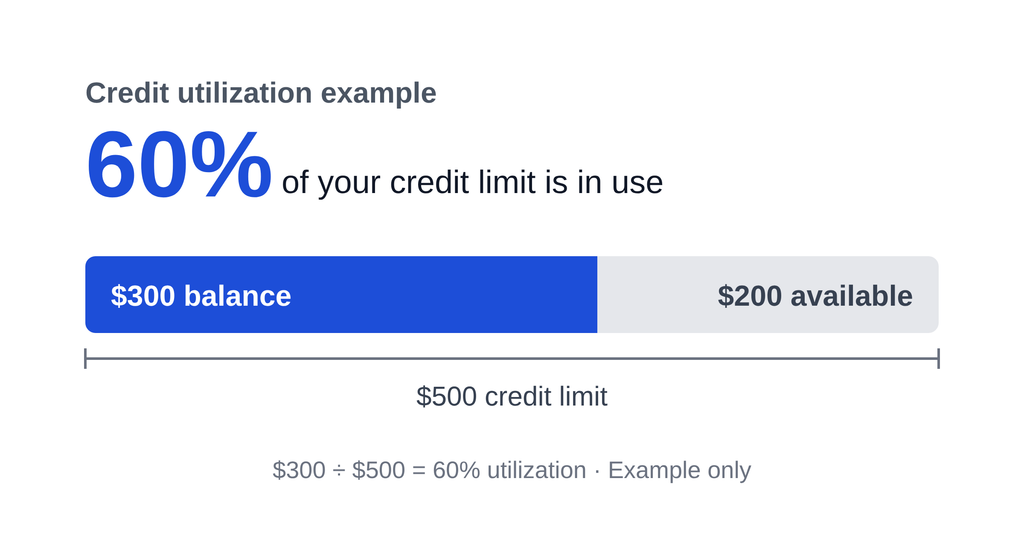
Those new to credit may be surprised by how low their first credit limit is, Carlos says. “If your limit is $500 and you put a $300 purchase on it, you’re at 60% utilization, which can pull your score down even if you pay in full every month,” he notes. Credit utilization, or how much of your available credit you’re using, is a major factor in your credit score.
Limited Rewards Program
Patrick Yaghoobians, CFP, founder and financial planner at Noor Financial Services in California, says store credit cards are generally among his least recommended types of credit cards, primarily because of their high interest rates and limited rewards.
That said, he does think they make sense in some situations, “particularly for someone who regularly shops at a specific retailer and consistently pays off their credit card balances in full each month,” Yaghoobians explains, adding, “Even then, my biggest concern is whether having the card encourages unnecessary spending.”
No Interest If Paid in Full
Copertino warns consumers to look out for those “no interest if paid in full” offers. “Many of these use deferred interest,” she explains, “so if any balance remains when the promotion ends, you’re charged interest all the way back to the purchase date.”
Learn more about how deferred interest works in our guide to 0% APR intro rate cards.
Consider Other Ways to Build Credit
Carlos, who opened a store credit card about 15 years ago and bought one shirt, says that the attached credit line barely moved the needle on his score at the time. His advice to clients today is this: If you can qualify for a secured card or a basic general-purpose no-annual-fee cash back card, start there. “It’s more useful, and you can use it everywhere you shop.”
Pay Attention to Mail About Credit Card Updates
Whether you have a store credit card or a traditional credit card, it’s important to carefully read the mail from your credit card issuer. Many times those letters are alerting you to changes in how they collect interest. Stacy Miller, CFP, MQFP, CEFT, founder and CEO of BayView Financial Planning in Tampa, Fla., says she received an eye-opening letter in 2024 from a high-end department store where she has a card.
Despite having a credit score above 800, Miller learned that her credit card issuer planned to raise her interest rate to an astonishing 31.15% APR.
Numbers in Context. With an APR that high:
- If she charged $1,000 to the card.
- Only made the minimum monthly payments of $30
- It would take approximately 6.5 years to pay off the balance.
- Her total payments would come out to more than $2,300.
“As we navigate our financial journeys, it’s vital to review the terms of our credit agreements periodically and assess whether they align with our current financial goals and needs,” Miller says. “If they don’t, as was the case with my card, taking decisive action to rectify the situation can save thousands of dollars in potential interest payments and contribute significantly to long-term financial health.”
With reporting by Casandra Andrews

 Matthew Mack