 Chris O'Shea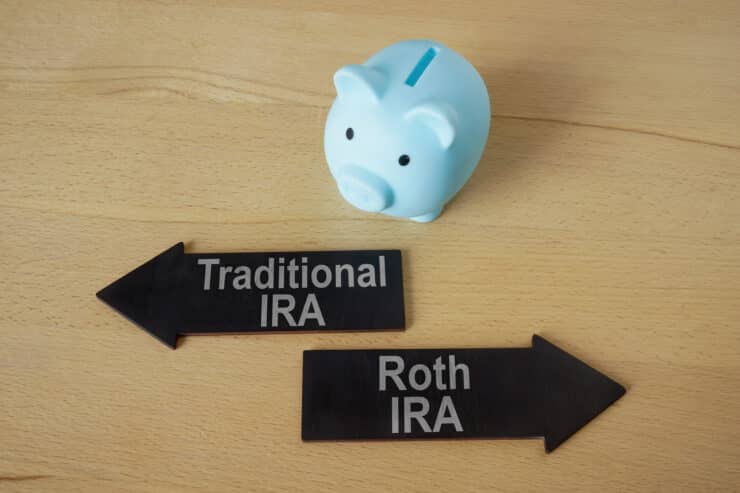
Converting a Traditional IRA to a Roth IRA can be worthwhile, but timing matters. Deciding when to make this “Roth Conversion” primarily depends on whether you expect your current tax rate now to be lower than your future tax rates.
When a Roth Conversion Makes Sense
Here are a few times when a Roth conversion might be a good idea.
- Lower Income Year. A good time to switch to a Roth IRA is usually when you make less money. That’s because the tax cost of making the switch may be more manageable.
- Down Market Year. You can also convert when there is a drop in the stock market. That’s because your IRA balance is temporarily lower, and you may be able to convert the same investments at a lower tax cost and let any future recovery happen inside the Roth. That growth can later come out tax-free if you meet the Roth IRA guidelines.
What to Consider Before Converting
The potential tradeoff of converting is that you pay taxes now in exchange for more tax flexibility in the future. Here are a few things to consider:
- Tax Bracket: Current vs Future. If you anticipate being in a higher tax bracket in the future, converting to a Roth is more attractive.
- The Five-Year Rule. Roth IRAs have a general five-year rule for tax-free qualified distributions. Every time you convert, it starts a new five-year window in which you must wait to make withdrawals penalty-free if you are under the age of 59½. If you convert to Roth frequently, it can create multiple waiting periods to track.
- Required Distributions. Unlike Traditional IRAs, Roth IRAs don’t require you to take an annual distribution, required minimum distributions (RMD). Traditional IRAs also require you to take annual withdrawals starting at age 73; Roth does not. That’s what makes the Roth good for long-term planning, tax planning, and building wealth.
- Paying Taxes. Many people prefer to pay the conversion tax from cash outside the IRA. Using IRA assets to cover the tax can reduce the amount that stays invested, and if you are under 59½, it can also create extra penalties on the amount withdrawn for taxes, per the IRS.
- Irreversibility. Since 2018, Roth IRA conversions generally cannot be recharacterized back into a traditional IRA. Once you convert, you usually cannot undo it later, according to the IRS.
Benefits of Conversion
A Roth conversion may help you:
- Lock in taxes at today’s rate rather than a potentially higher future rate
- Avoid required minimum distributions (RMD)
- Tax-free withdrawal potential in retirement
- Estate planning flexibility for heirs
- Tax diversification (so that not all retirement income depends on one tax treatment)
Downsides of Roth Conversion
It may not be the best move if:
- You anticipate being in a lower bracket in the future
- Conversion pushes you into a higher tax bracket
- Extra income impacts Medicare premiums, tax credits, or taxation of other income
- You need the money earlier than retirement
- Don’t have cash outside the IRA to pay the tax bill
Steps to Consider
Before converting, it helps to follow a simple process:
- Estimate how much of the conversion will be taxable.
- Project whether that amount would move you into a higher bracket.
- Decide if you should convert all at once or in smaller pieces over several years.
- Make sure you have cash to cover the taxes.
- Check on how soon you may need the money, because of the five-year rules.
- Review your plan with a tax professional. Is the conversion too big? Are you close to Medicare or other income thresholds?
Bottom Line on Roth Conversion
A Roth conversion can be a savvy financial move, especially in lower-income years or after a market drop. The best decision always depends on your individual tax situation now, your expected tax bracket later, how long you leave the money invested, and if you can pay the taxes now.
Do One Thing: Before converting your IRA into a Roth IRA, consider all the consequences thoroughly.
This information is for educational purposes only. It is not intended, nor should it be used, as tax, legal, or financial advice. Please consult a financial advisor, tax professional, or legal counsel regarding your personal financial situation.


 Jean Chatzky