 Chris O'Shea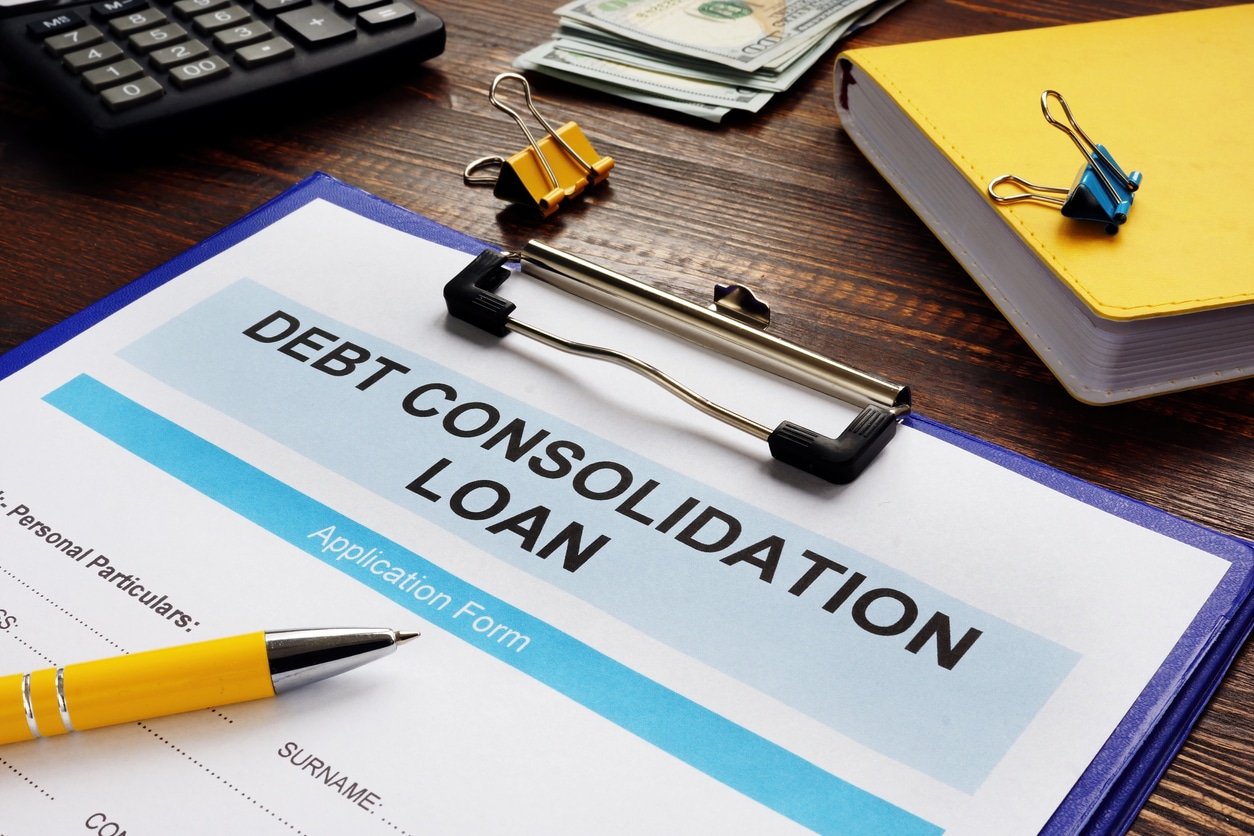
You’ve probably heard of debt consolidation loans as a way to pay down multiple debts at once. You might have also wondered: what’s the actual difference between a personal loan and a debt consolidation loan? Short answer: there isn’t one. Here’s everything you need to know before deciding if consolidating your debt is the right move.
Compare Personal Loans and Debt Consolidation Loans
A debt consolidation loan is simply a personal loan used to pay off other debts. That’s it. Lenders advertise “debt consolidation loans” because it describes what you’re doing with the money, not because it’s a separate financial product with its own rates or rules. The loan application, the underwriting, the fixed payments all of it works the same as any other personal loan.
When Personal Loans Become Debt Consolidation Loans
A personal loan becomes a debt consolidation loan the moment you use it to pay off your credit cards or other debts instead of a home repair or a vacation. So if a lender’s “debt consolidation loan” looks different from their “personal loan” in rate or terms, that’s marketing, not substance. It’s worth comparing the fine print either way.
Personal Loan Basics
A personal loan is an installment loan, which means you borrow a set amount upfront and pay it back in fixed monthly payments over a set term, typically two to seven years. A few basics that matter when you’re evaluating one:
- Loan Amount. Loans usually range from $1,000 to $20,000, though some lenders go higher for borrowers with strong credit.
- Rates and Terms Vary. The specific interest rate and terms are based on your credit score, income, and the lender. Well-qualified borrowers can land rates in the low double digits; borrowers with weaker credit may see rates in the 20s or 30s.
- Most Personal Loans are Unsecured. This means you don’t put up your car, home, or other property as collateral. That makes them faster to get than a secured loan, but it also means lenders lean more heavily on your credit score and income to set your rate.
- Funding is Typically Fast. Many personal loans are funded in just a few business days. This matters if you’re trying to stop interest from accruing on existing balances.
The Benefits of Consolidating
If you use a personal loan to pay off higher-interest debt, here’s what’s actually on the table:
- Lower Rate. Personal loan rates for good-credit borrowers frequently run well below credit card APRs. On a $10,000 balance, even a 5 to 10 percentage point gap can mean hundreds of dollars saved in interest before the loan is paid off.
- Easy Payment. Instead of tracking due dates and minimum payments across several cards, you make a single payment, on a single date, to a single lender. That alone reduces the odds of a missed payment slipping through the cracks.
- Fixed Interest Rate and Payoff Date. Most personal loans lock in your rate for the life of the loan and come with a set end date. Unlike a credit card balance that can technically follow you around for years if you only pay the minimum, a personal loan has a finish line built in from day one.
Is Consolidating Actually Worth It? Do the Math First
Consolidation only pays off if the numbers actually work in your favor. Before you apply, walk through this quick check:
- Compare the total cost, not just the rate. A lower interest rate is good, but factor in any origination fee (commonly 1% to 10% of the loan amount) that some lenders charge upfront. A slightly lower rate with a big origination fee might cost more than a slightly higher rate with no fee.
- Check the term length. A longer term lowers your monthly payment but can mean paying more in total interest, even at a better rate. Run the numbers for a couple of different terms before deciding.
- Confirm you’re actually saving, not just simplifying. Consolidating multiple debts into one is genuinely useful, but if the new loan’s total cost is higher than what you’d pay sticking with your current debts, you’re trading convenience for money. Know that trade-off going in.
What to Watch For With Personal Loans and Consolidation Loans
- A hard credit check is standard. Applying for a personal loan usually involves:
- a hard inquiry, which can cause a small, temporary dip in your score.
- This is different from many short-term buy-now-pay-later plans that only require a soft check, or soft inquiry.
- Your rate depends on your credit. The lowest advertised rates typically go to borrowers with strong credit and steady income.
- If your credit needs work, you may not qualify for a rate low enough to make consolidation worthwhile.
- It’s worth getting a rate estimate before assuming it’ll save you money.
- The debt doesn’t disappear — it moves. Consolidation:
- Restructures your debt
- It doesn’t erase it.
- You still owe the full amount, just to one lender instead of several.
- Beware of the “reload” trap. This is the most common way consolidation backfires:
- You pay off your credit cards with the loan.
- Then gradually run the card balances back up.
- Now you’re carrying the original debt again, plus a new loan payment on top of it.
- Consolidation only works long-term if you stop adding new debt to the cards you just paid off.
Other Options Worth Knowing About
A personal loan isn’t the only way to consolidate debt. Depending on your situation, it’s worth knowing these exist:
- Balance Transfer Cards. Sometimes you’ll receive an offer of a 0% introductory rate for a set period, which can beat even the lowest personal loan rate. The best-case scenario is to pay off the balance before the promotional period ends and the rate jumps up.
- Learn what you should know about intro rate cards.
- Nonprofit Credit Counseling and Debt Management Plans can help if your debt feels unmanageable regardless of the loan option, often at a lower cost than for-profit alternatives, and without taking on new debt.
Neither is automatically better than a personal loan; the right choice depends on your balances, your timeline, and your credit.
Before You Apply
- Add up what you’re currently paying in interest across all the debts you’d consolidate.
- Get a rate estimate for a personal loan (many lenders let you check your likely rate with only a soft credit check) and compare the total cost, including any fees, against what you calculated in step one.
- Make a plan for the accounts you pay off. Whether that’s closing them, cutting them up, or simply committing not to use them until the new loan is paid off.
If the loan clearly saves you money and you have a plan to avoid reloading old debt, consolidating can be one of the more effective ways to get out of high-interest debt faster. If the math doesn’t clearly favor it, it’s worth exploring the alternatives above before committing.


 Jean Chatzky

